Booking choice: The old town walk with wine tasting, from $18 per person. Check dates Tour details
Every two years the World Heritage Committee opens the Nessebar file, and every two years the Bulgarian press asks whether the town will be put on the List of World Heritage in Danger. In 2023 the experts recommended exactly that and the Committee declined. In July 2025 it declined again, but attached a list of homework with dates on it. The dates land this year.
This post explains what UNESCO actually asked for in Decision 47 COM 7B.101, what happened over the summer of 2026, what the 1 December report has to contain, and the one piece of it that touches your visit: how cars reach the peninsula.
The quick answer
Nessebar stays on the World Heritage List. The 2025 decision asked Bulgaria for a finished Vision and management plan by 1 February 2026, a monitoring mission in summer 2026 and a progress report by 1 December 2026, for discussion at the 2027 session. The old town, its churches and the harbour are all open as normal. The pressure points are new building, the port and marina, and visitor cars, which UNESCO wants kept on the mainland.
What did UNESCO decide about Nessebar in July 2025?
Decision 47 COM 7B.101 kept Nessebar off the Danger List, welcomed progress, and set three dates: 1 February 2026, summer 2026 and 1 December 2026.
The decision, adopted at the 47th session in Paris on 10 July 2025, with Bulgaria in the chair, is a 15-paragraph document. It welcomes the work done since 2023: an assessment of the attributes that give the town its Outstanding Universal Value, a Vision for the Future with an implementation roadmap, and a draft Conservation and Management Plan. It then asks for all three to be finalised to ICOMOS's recommendations by 1 February 2026.
It asks for a recovery plan for the historic townscape and coast, for the long-delayed General Development Plan covering the buffer zone to be adopted with strict interim rules until then, and welcomes the decision not to build a school on the ancient necropolis. It requests a joint World Heritage Centre and ICOMOS Reactive Monitoring mission in summer 2026, and an updated state of conservation report by 1 December 2026, to be examined at the 49th session.
Bulgarian National Radio reported the item as passing without debate.
Why has Nessebar been under monitoring since 2010?
Because the 2018 and 2023 missions found the wooden houses, the street pattern and the archaeology eroding under out-of-scale building and summer tourism.
Nessebar was inscribed in 1983 for the layered remains of a Greek, Roman and Byzantine port and the 19th-century timber houses built on top of them. The 2023 state of conservation report lists the pressures: housing, tourism, a missing management system, marine transport infrastructure and earlier illegal construction. Missions came in 2010, 2012, 2017, 2018 and January 2023.
The 2023 mission was blunt. Some attributes had "eroded beyond recovery", the vernacular architecture was severely undermined, the archaeology barely visible, and it recommended the Danger List. The Committee in Riyadh chose a final warning instead, crediting a 2022 traffic plan, a permit inventory, church conservation and the underwater survey that brought the drowned city inside the property.
| Date | What happened | Outcome |
|---|---|---|
| 1983 | Inscribed at the 7th session in Florence | Criteria (iii) and (iv) |
| Nov 2010, Nov 2012 | First reactive monitoring and ICOMOS missions | Concerns about new building |
| Oct 2018 | Joint mission | Attributes found deteriorating |
| Jan 2023 | Joint mission; experts recommend the Danger List | Committee declines, asks for a plan |
| 2023 to 2026 | Boundary modifications add the underwater remains | Property now 34.72 ha |
| 10 Jul 2025 | Decision 47 COM 7B.101 | Stays on the List; three deadlines set |
| Summer 2026 | Reactive Monitoring mission requested | Findings go to the 49th session |
| 1 Dec 2026 | Updated report due from Bulgaria | Examined in 2027 |
What happened in summer 2026?
The Vision to 2045 was presented in March, UNESCO representatives met residents in Nessebar on 27 August, and the mission's own report had not been published when we wrote this.
The year started with the paperwork. On 24 March 2026 the deputy culture minister, the mayor and the head of the national heritage institute presented the shared Vision for Old Nessebar to 2045 at a public discussion in the town; the municipality's own site lists it as the "Vision for Old Nessebar 2026-2045" alongside a cultural heritage strategy for 2023 to 2032. Whether the final texts reached Paris by 1 February, as the decision asked, is not something either side has said in public.
A UNESCO-linked underwater heritage panel had toured Nessebar in October 2025 and, in BNT's words, highly commended the diving work while noting the management plan was still unfinished. Then on 27 August 2026 the municipality called residents to the Yana Laskova community centre for a meeting with the Ministry of Culture and UNESCO representatives on the future of the old town. That is the public face of the summer mission.
What the mission concluded is not yet public. Mission reports normally appear with the Committee's working documents in the spring before the session, so expect it around May 2027. We will update this post when it does.
What is the marina and port question?
UNESCO wants the port terminal and Marina Nessebar considered for relocation off the peninsula in the long run, and no seabed works that could damage the sunken city.
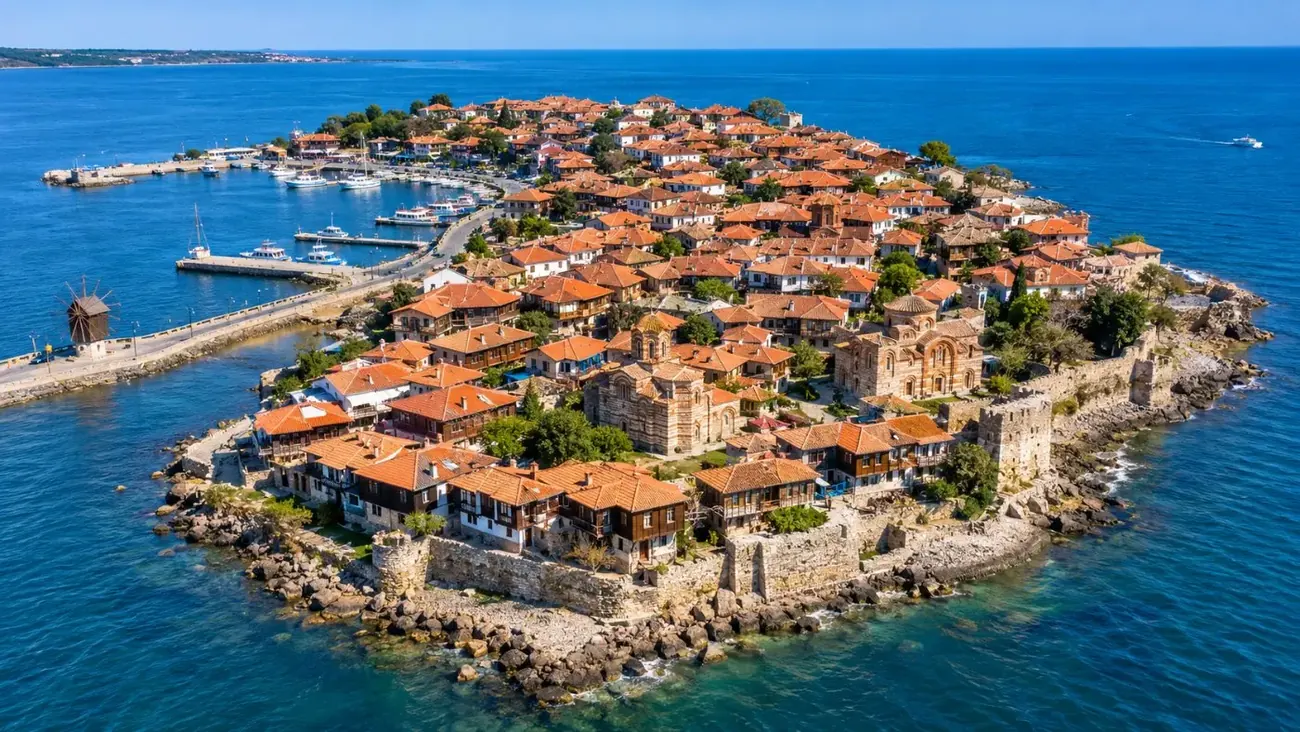
The harbour behind the ancient theatre is a working port: fishing boats, excursion boats, the Sunny Beach shuttle and the occasional cruise ship. Marina Nessebar, where the 4-hour fishing and lunch trip starts, is part of the same waterfront. Since the 2023 boundary change the seabed around it is inside the World Heritage property, because the outlines of the oldest harbour and walls lie under it.
Paragraph 11 of the 2025 decision says the Committee is concerned about the port terminal and marina's potential impact, including on underwater heritage, repeats its recommendation that long-term relocation outside the peninsula and its visual setting be considered, asks for short and medium term fixes that respect the site, and invites an ICOMOS advisory mission to look at it. The 2023 report had already asked for no seabed interventions and for navigation around the peninsula to be controlled.
None of this stops a boat sailing tomorrow. The excursion boats only ever return to the jetty they left, so a tighter navigation rule changes nothing you would notice. Moving a marina takes decades and no money is allocated.
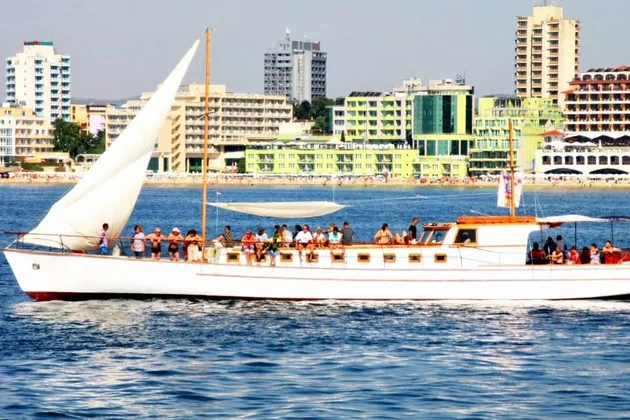
Four hours round the bays with a swim stop, fishing gear and lunch on deck, from the harbour UNESCO is arguing about.
Check dates for the 4-hour boat tripWhat does the UNESCO watch mean for visitors?
Nothing closes. The churches, the museum and the lanes are open as normal. What tightens is cars: UNESCO wants visitor parking kept on the mainland, and the town is already enforcing it.
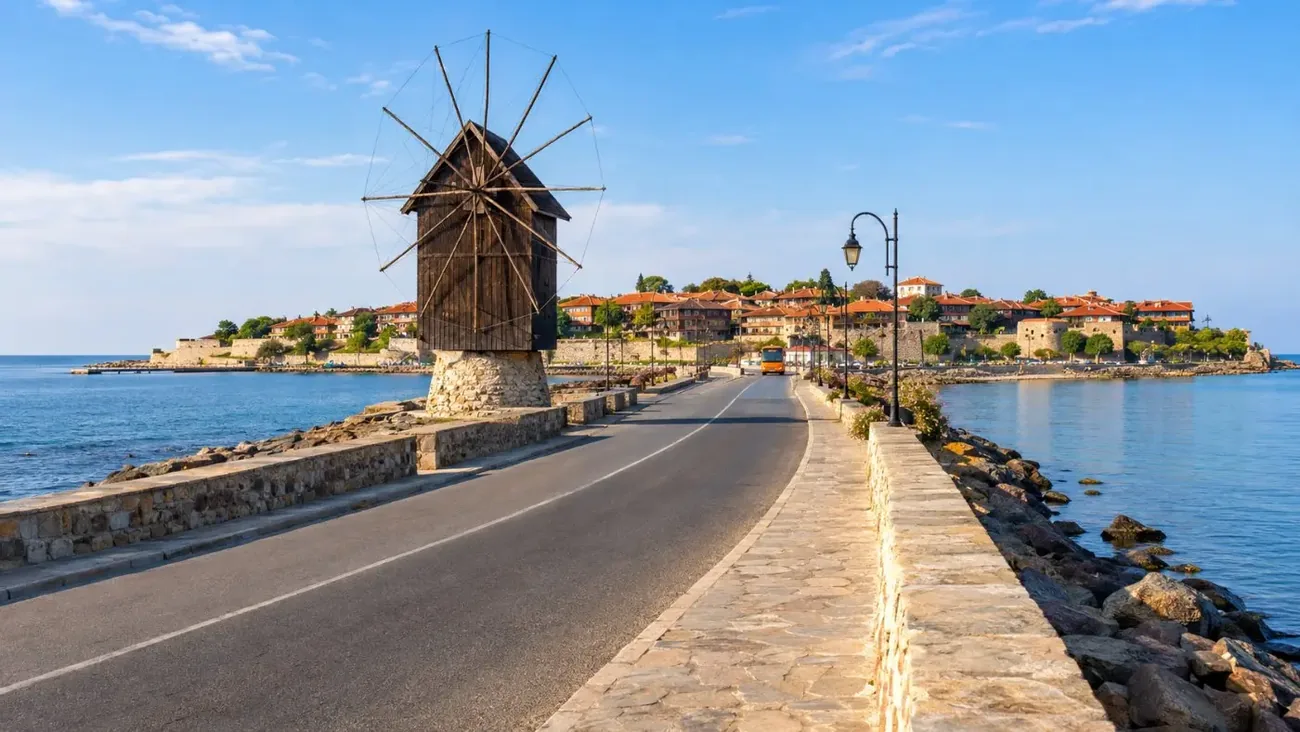
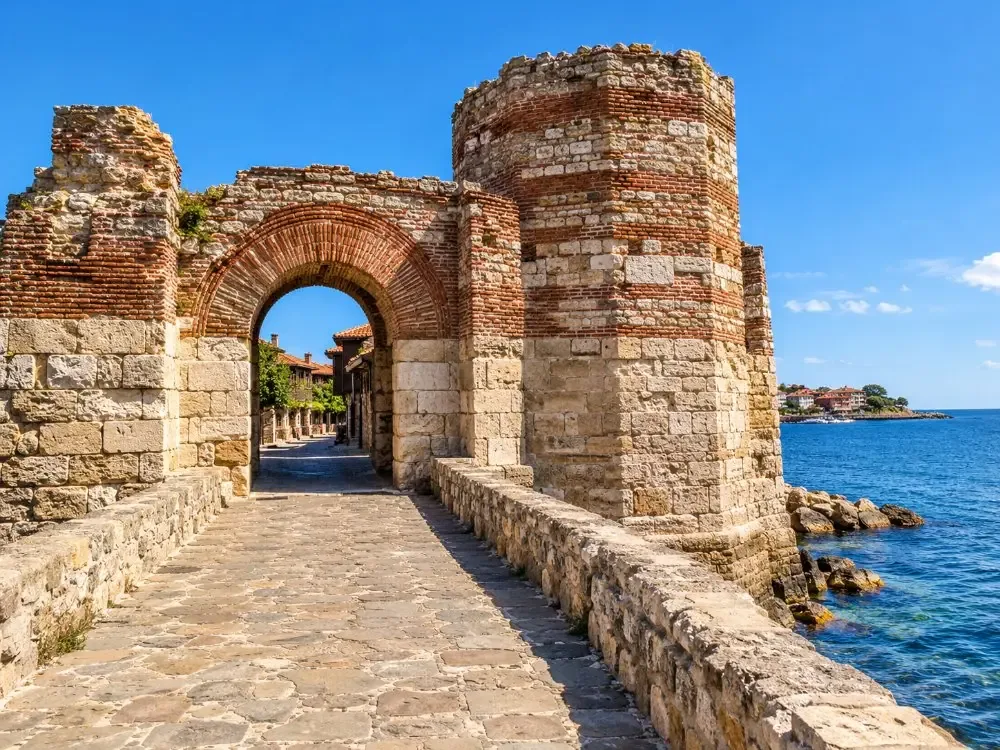
Paragraph 12 of the decision asks Bulgaria for a mainland transport interchange so visitors reach the peninsula by public transport, and for parking inside the ancient city to be limited to residents and the fishing port. The town has been moving that way since the 2022 traffic plan. The old town is a restricted-traffic zone; the municipality now requires hotel guests to have their plate registered in advance by their accommodation, allows one hour to unload, then sends the car to a car park outside the walls.
For a day visitor the arithmetic is clear. The north car park on Kraybrezhna Street was 1.50 euros an hour this summer, 7.50 for a long day; the blue zone 1 euro an hour, three hours max; a clamp 20 euros, a tow 40. Bus 1 from Sunny Beach is 1 euro and stops at the gate. Our Sunny Beach to Nessebar guide covers every option. Expect the car parks to move further from the causeway, not nearer, over the next few seasons.
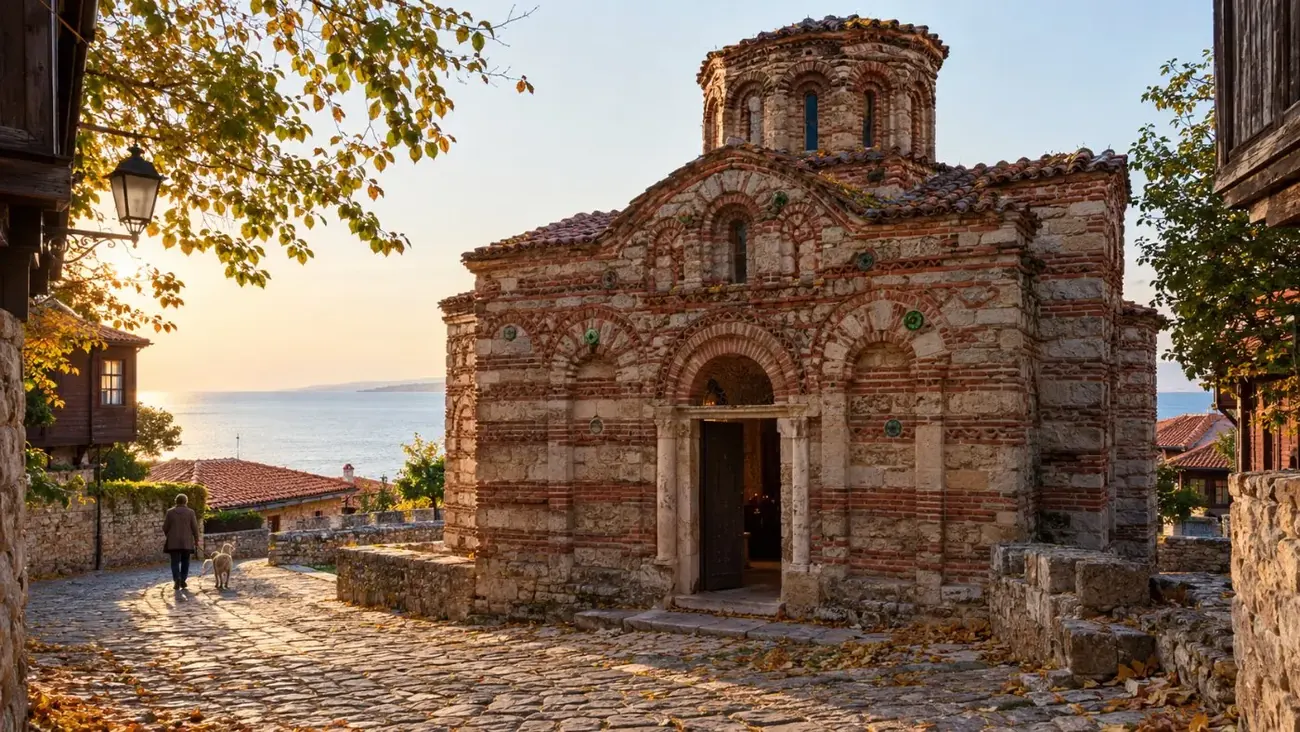
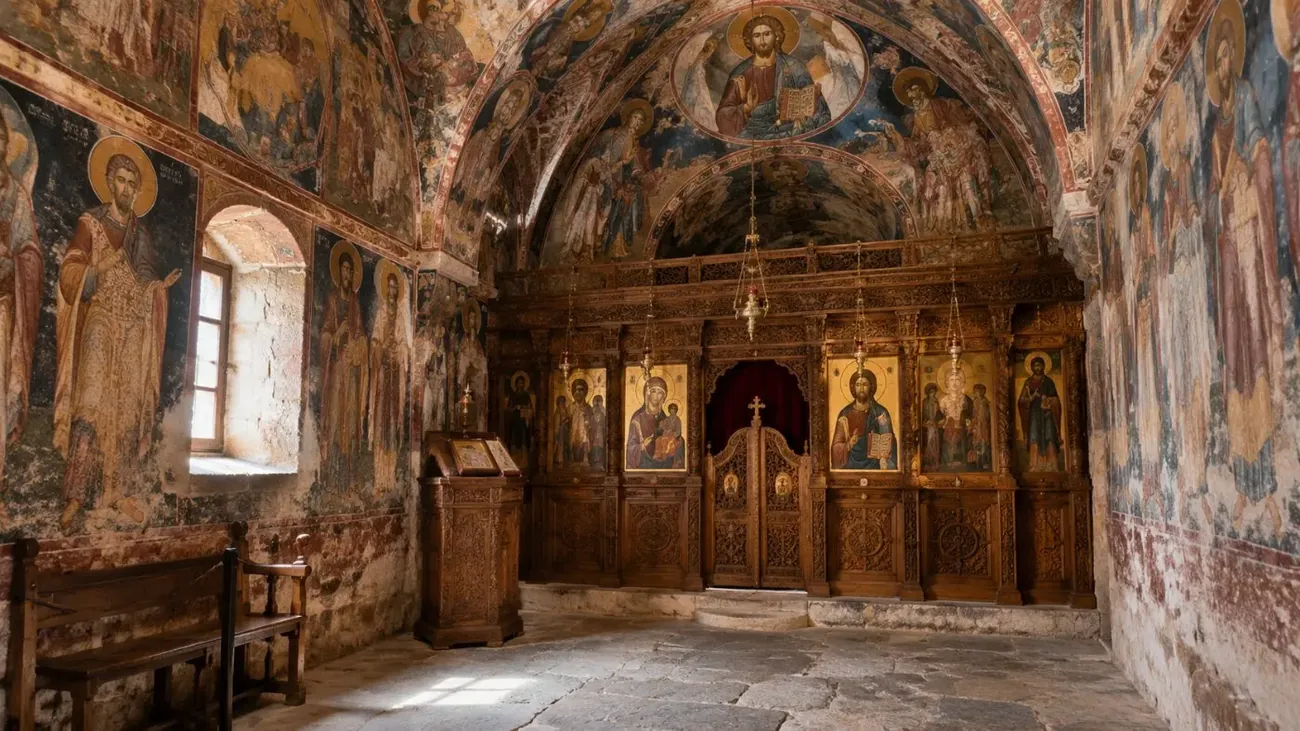
The other visible effect is fencing. Christ Pantocrator spent a second summer closed off awaiting restoration and the municipality has a project for the ruined St John Aliturgetos. Both are seen from outside anyway; St Stephen and its 1599 frescoes are open daily. Which churches to pay for is here.
Could Nessebar lose its World Heritage status?
Removal from the List is rare and a last step. The realistic risk is the Danger List, which changes the paperwork, not the town.
Two tiers exist. The Danger List is a flag: closer scrutiny, a corrective plan, often more money; about fifty sites carry it. Deletion has happened three times, to an oryx sanctuary in Oman, the Dresden Elbe Valley and Liverpool's waterfront. Nessebar is not near that step. The 2025 decision does not even mention the Danger List, which the 2023 one did.
The Committee has given the new plans time, and the 2027 session will judge the mission report against them. A Danger listing is possible if the management plan is still a draft. It would change nothing about a visit: the frescoes stay in St Stephen and the gate stays free to walk through.
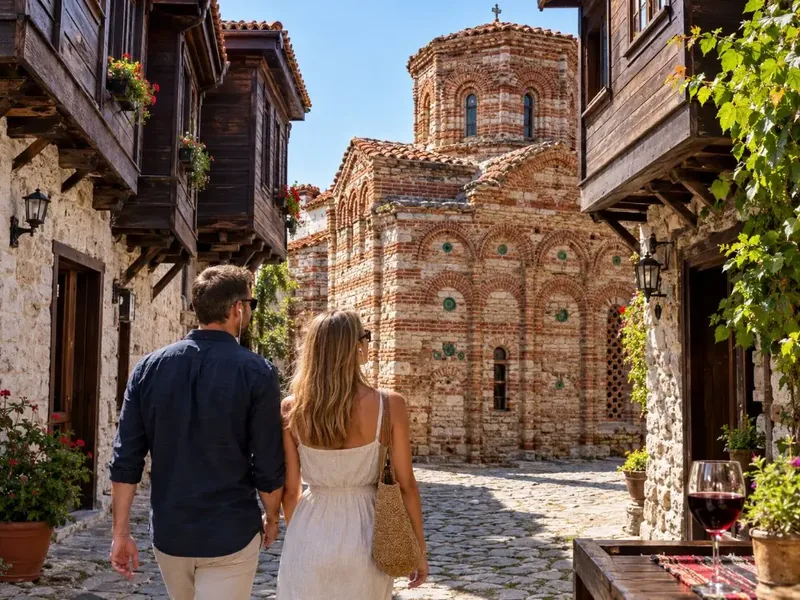
Fifteen landmarks with an audio guide in five languages, at your own pace, then a glass of local wine. The cheap way to understand what the fuss is about.
Explore the old town walk with wine tasting Tour detailsFrequently asked questions
Is Nessebar still a UNESCO World Heritage Site in 2026?
Yes. The World Heritage Committee kept it on the List at its July 2025 session and did not place it on the Danger List. The next review follows Bulgaria's report due 1 December 2026, at the 2027 session.
Is anything in old Nessebar closed because of UNESCO?
No. The Archaeological Museum, St Stephen and the small churches keep their normal seasonal hours. Two churches, Christ Pantocrator and St John Aliturgetos, are seen from outside while restoration is pending, which is a conservation matter rather than a UNESCO closure.
Can I drive into old Nessebar?
Only residents and registered hotel guests, who get one hour to unload before parking outside the walls. Day visitors use the north car park or the new-town blue zone, or take bus 1 for a euro. UNESCO has asked for visitor parking to stay on the mainland.
What is the problem with the Nessebar marina?
The port terminal and marina sit over the drowned parts of the ancient city, now inside the World Heritage property. UNESCO has asked Bulgaria to avoid seabed works, control navigation round the peninsula and study moving the facilities off the peninsula in the long term.
Ready to book
Choose your tour
Free cancellation up to 24 hours before on every option. Prices are from-prices in USD and move with the season.
Old Town Walk with Audio Guide & Wine Tasting
- Audio guide and headphones (EN, DE, PL, RU, BG)
- Route past more than 15 old-town landmarks
- Wine tasting at a winery in the old town
4-Hour Boat Trip with Fishing, Lunch & Open Bar
- 4-hour cruise with a swim stop
- Lunch buffet, snacks and unlimited drinks
- Fishing equipment and an audio guide
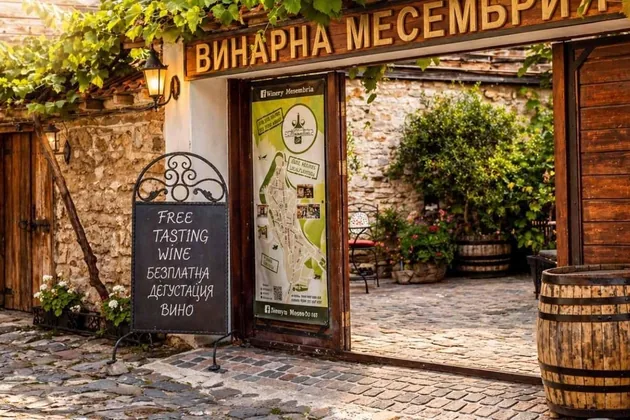
Wine Tasting with Homemade Focaccia
- Guided tasting of 5 to 6 dry Bulgarian wines
- Focaccia baked on site (vegetarian)
- Small group, 10 people at most