Booking choice: The old town walk with wine tasting, from $18 per person. Check dates Tour details
Nessebar's churches are why the town is on the World Heritage List. UNESCO's listing calls it a spiritual centre of Christianity for about a thousand years, from the first basilicas after Constantine to the small brick churches of the 13th and 14th centuries with their striped walls and glazed ceramic discs. Most of what you will see is free and roofless. A handful are museums with a door price.
All the prices and hours below come from the Ancient Nessebar Museum, which runs every ticketed site in the old town, and were current in October 2026. They are in euros since the switch on 1 January 2026, with the old leva figures still printed alongside.
The quick answer
Pay for St Stephen (4.60 euros) and the Archaeological Museum (4.60 euros), together 7.67 on the combined ticket. Add St Spas or St Paraskeva at 2.56 if you like painted interiors. See St Sophia, St John Aliturgetos, the Eleusa basilica and Christ Pantocrator from outside for free. The big sites open at 9:00 all year; the small churches open at 10:30, shut for lunch at 14:00, and from mid-October to March open only on request. The museum's own audio device is 3.07 euros.
How many churches are there in Nessebar?
Legend says about 40. The museum has records of 23, and around a dozen stand today in some form, from complete painted interiors to a ring of column bases.
Every guidebook repeats the forty. The museum's own history page is more careful: legends claim about 40 churches, and data exist for 23. The Ministry of Tourism says the same. A 2026 count citing the municipality puts 15 surviving church buildings on the register, 13 of them protected monuments, which matches what you see on the ground: five museum churches you can enter, one working parish church, and a scatter of ruins from a 6th-century basilica down to a few columns in a car park.
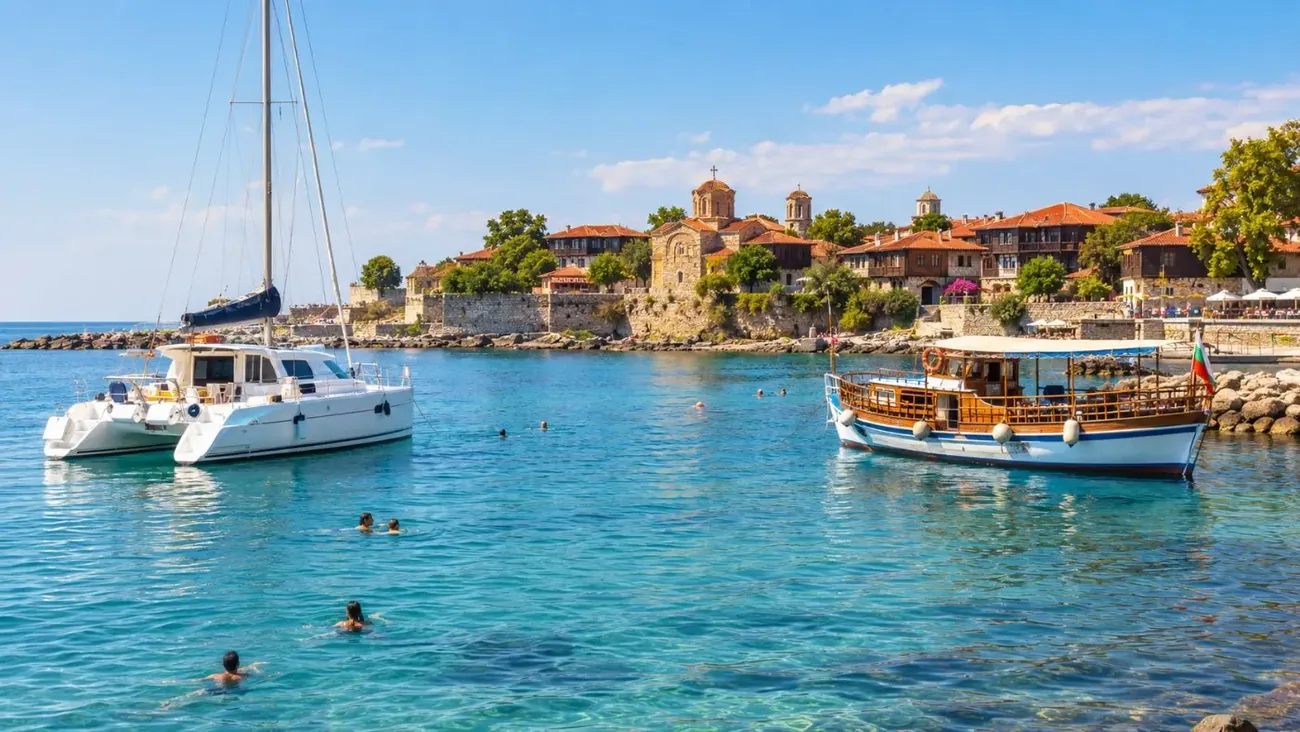
The number is high because Nessebar was a bishopric for centuries and every ruler who held it left a church. The Ministry of Culture estimates that a quarter to a third of the ancient town has gone into the sea, so some of the missing forty are under the bay.
For a visitor the useful count is five plus one. Five churches run as museums with a ticket: St Stephen, St Spas, St Paraskeva, St John the Baptist, and Christ Pantocrator when it is not fenced. One, the Church of the Assumption from 1894, is a working Orthodox church with free entry. The rest you look at.
What do the church tickets cost in 2026?
4.60 euros for St Stephen or the Archaeological Museum, 2.56 for each small church and the windmill, 3.07 for the Ethnographic Museum. Children pay half. Combinations from 6.14 euros.
The official 2026 price list has two categories, adult and child, and no student rate. Everything is sold at the door of each site; the combinations are sold at the Archaeological Museum ticket office at Mesambria 2A, just inside the gate. There is no online sale and no need for one.
| Site | Adult | Child | What it is |
|---|---|---|---|
| St Stephen | 4.60 euros | 2.30 | The 1599 frescoes; the one not to miss |
| Archaeological Museum | 4.60 euros | 2.30 | Four halls, Thracian coins, the town's story |
| St Spas | 2.56 euros | 1.53 | A complete 1609 painted interior |
| St Paraskeva | 2.56 euros | 1.53 | Murals rescued from demolished churches |
| St John the Baptist | 2.56 euros | 1.53 | 10th-century, rough stone, fresco fragments |
| Windmill | 2.56 euros | 1.53 | The causeway windmill, rebuilt |
| Ethnographic Museum | 3.07 euros | 1.53 | An 1840 merchant's house |
| Archaeological + St Stephen | 7.67 euros | 4.09 | The right ticket for most visitors |
| Archaeological + St Stephen + 1 small church | 9.71 euros | 4.60 | Add St Paraskeva or St Spas |
| St Stephen + St Spas | 6.14 euros | 3.07 | Two painted interiors, no museum |
| All churches + windmill | 13.29 euros | 6.65 | No museums |
| Everything, 7 sites | 17.90 euros | 8.69 | A full day of doors |
Groups get organised rates about ten percent lower, which is where coach tours make their margin on "tickets included". The audio-guided walk on GetYourGuide does not include any of these tickets; it says so, naming St Stephen.
When are the churches open?
The Archaeological Museum and St Stephen open at 9:00 every day of the year. The small churches open at 10:30 in season, close for lunch at 14:00, and run on request only from mid-October to March.
The museum's hours table splits the year into five periods. The two big sites never close; the five small ones have a season and a lunch break, and the lunch break catches people every day. Arrive at a small church at 14:10 and the door is shut for twenty minutes.
| Period | Archaeological Museum and St Stephen | St John the Baptist, St Spas, St Paraskeva, Ethnographic, Windmill |
|---|---|---|
| 2 Jan to 31 Mar | 9:00 to 17:00 | On request only |
| 1 Apr to 30 Apr | 9:00 to 17:00 | 9:30 to 13:30 and 14:00 to 17:00 |
| 1 May to 1 Jun | 9:00 to 18:00 | 10:30 to 14:00 and 14:30 to 18:00 |
| 2 Jun to 14 Sep | 9:00 to 19:00 | 10:30 to 14:00 and 14:30 to 19:00 |
| 15 Sep to 12 Oct | 9:00 to 18:00 | 10:30 to 14:00 and 14:30 to 18:00 |
| 13 Oct to 31 Dec | 9:00 to 17:00 | On request only |
Christ Pantocrator and St Todor have no row in either the hours or the price table, which tells you their status: not open as ticketed sites in 2026. The table is headed 2025 on the museum's site but is the published schedule and matched what we saw reported through the 2026 season. Wikivoyage adds that in winter the museums close at weekends; the museum's own table does not say so, so ring 0554 46019 before a January Saturday. The 2027 periods and what they mean for a visit are in our season post.
Which churches are worth paying for?
St Stephen, without question. Then St Spas or St Paraskeva if you like paint, St John the Baptist if you like stone. The windmill is a photo stop with a ticket.
Ranked, with our reasons:
- St Stephen, 4.60 euros. The only interior in Nessebar that will stop you in the doorway. Three naves, every surface painted, a 16th-century iconostasis and an 18th-century carved bishop's throne. If you pay for one door, this is it.
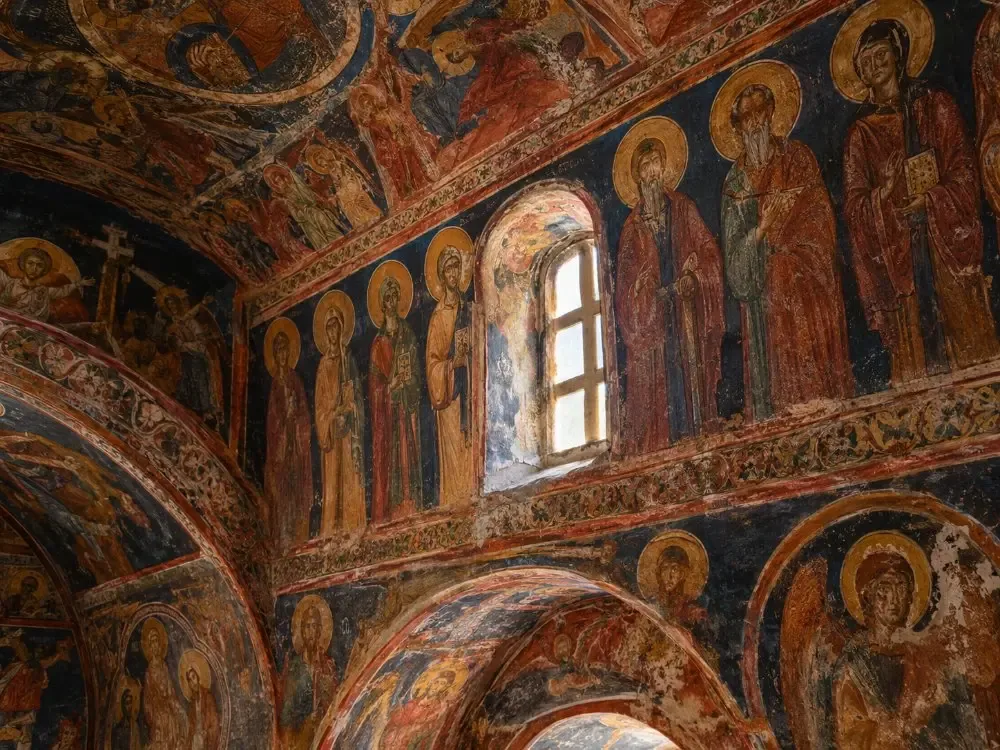
- St Spas, 2.56 euros. Small, single-nave, built in 1609 and painted shortly after by an anonymous hand, with the Virgin Platytera filling the apse. Ten minutes, all of them good. The tombstone of a Byzantine princess that used to lie in its floor is now in the Archaeological Museum.
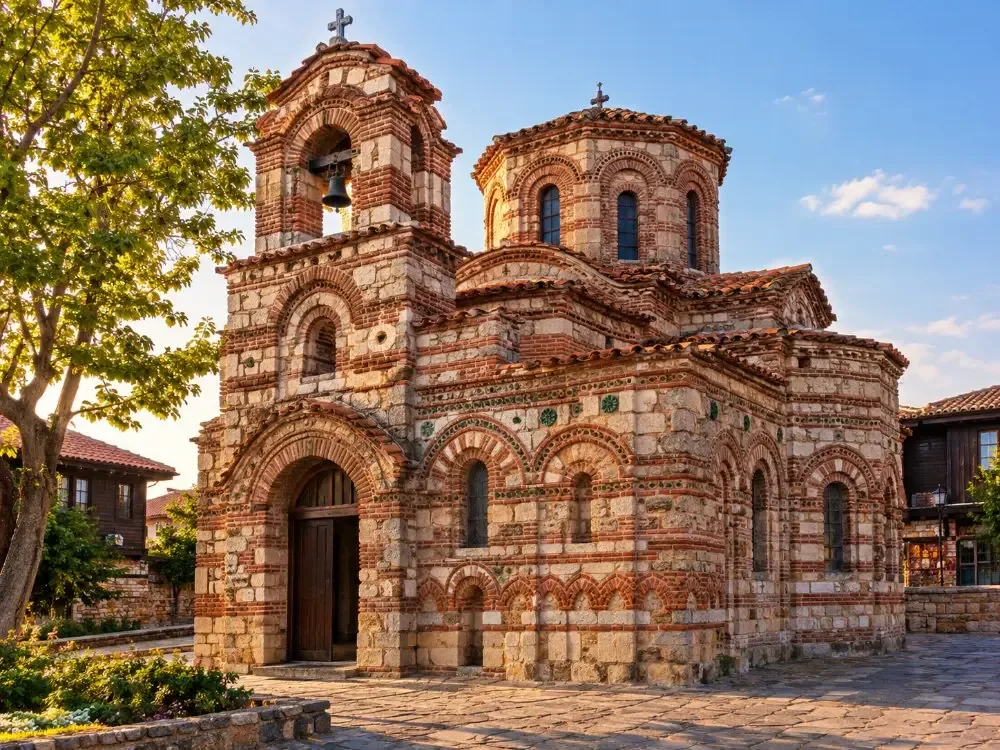
- St Paraskeva, 2.56 euros. The outside is the textbook Nessebar church: blind arches, fishbone and chequerboard brickwork, glazed saucers set in the walls. Inside, since the "Faith in Nessebar" project, it shows murals rescued from churches that no longer exist, including St George the Elder, built 1704 and demolished in 1958. A sobering room.
- St John the Baptist, 2.56 euros. The oldest standing church you can enter, 10th century on a 6th-century basilica found in the 2012 to 2013 restoration, rough stone rather than brick, with a 14th-century donor portrait on the south wall. For the architecture, not the paint.
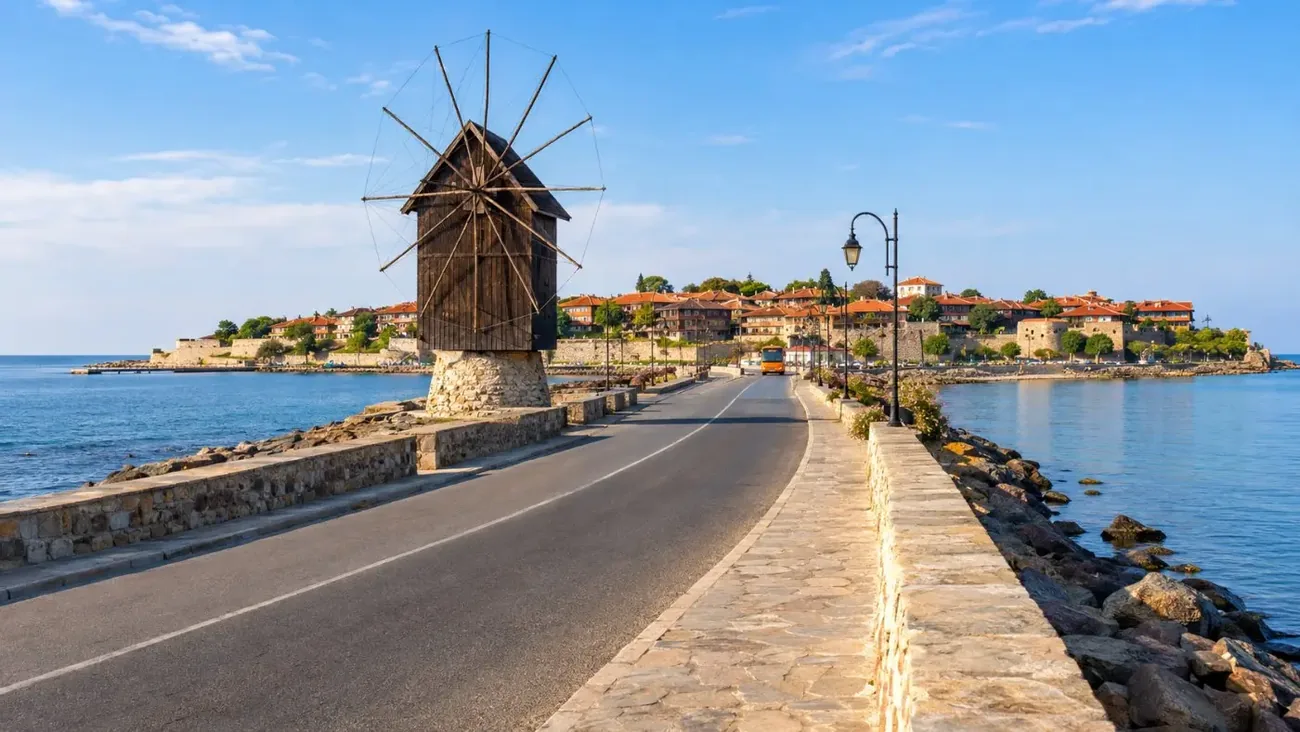
- The windmill, 2.56 euros. Rebuilt, most recently in 2022, after the original fell in a 1929 storm. Climb it for the photograph of the causeway. Children like it more than adults do.
Skip the Ethnographic Museum unless the 1840 merchant's house and its wine vessels appeal; it is a good house and a thin exhibition. Everything above is a museum, not a working church, so there is no dress code and photography is tolerated; a 2026 visitor reports it allowed in St Stephen, which is unusual for Bulgaria.
A numbered audio route past St Stephen, Pantocrator, St Sophia and a dozen more, with a host at the windmill and wine at the end.
Check dates for the old town walk with wine tastingWhat is inside St Stephen?
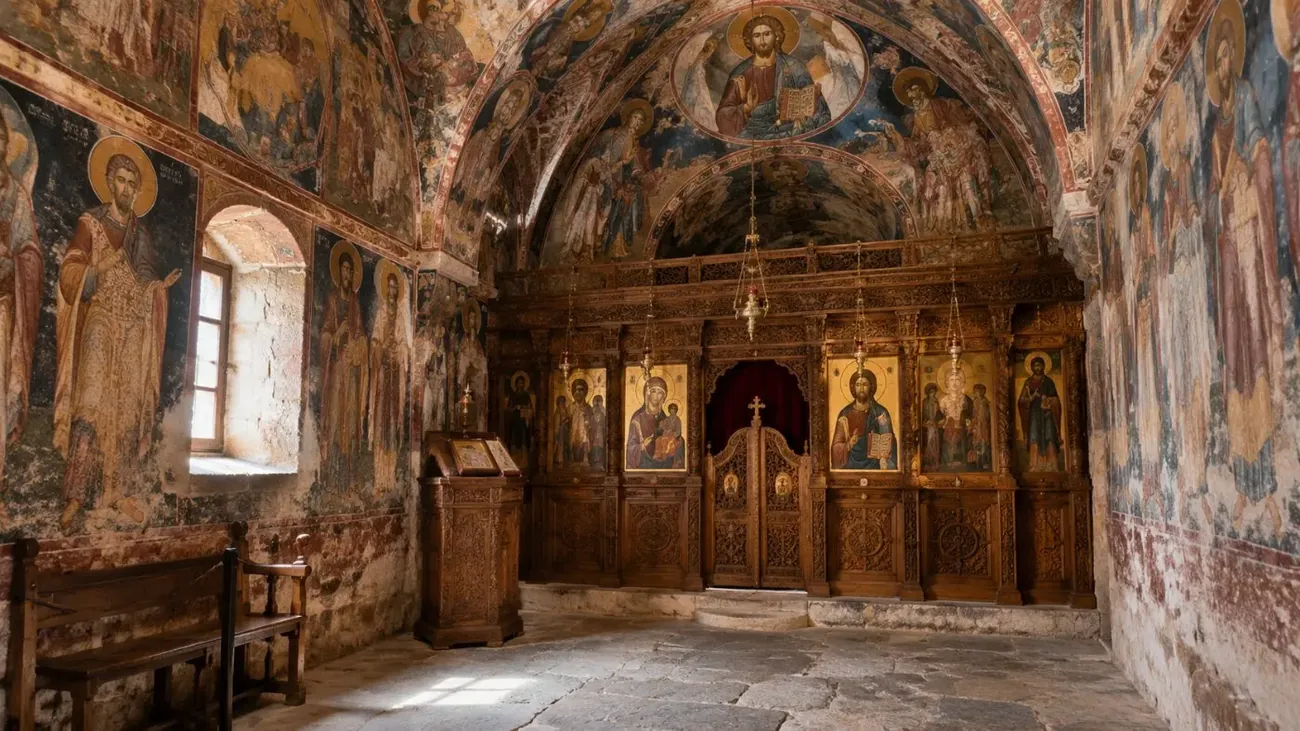
A three-nave basilica painted wall to ceiling in 1599: 258 compositions, more than a thousand figures, by three painters, plus a 16th-century iconostasis and an 18th-century carved throne.
St Stephen is the New Metropolis, the bishop's church that replaced St Sophia. The museum's page dates the building to the 11th to 13th centuries, lengthened in the 16th and given a narthex in the 18th, with older carved pieces reused in the walls.
The paintings are the point. A donor inscription over the south door dates them to 1599, and the museum counts 258 scenes with over a thousand figures, the work of three painters whose styles you can tell apart once someone points them out: the Life of the Virgin, the miracles of Christ, rows of saints at eye level, and in the narthex an 18th-century Last Judgement with the usual cheerful detail of sinners being sorted. The iconostasis is 16th-century and painted; the bishop's throne and pulpit are 18th-century wood carving of a high order.
Give it half an hour and go at 9:00; by 11:00 in July there is a queue at the door and a guide's voice in every corner. It operates as a museum, not a church, so nobody will ask you to cover up.
Is Christ Pantocrator open?
Not as a ticketed site in 2026. It has been fenced off for restoration and seen from outside only; when open it houses an exhibition of old maps.
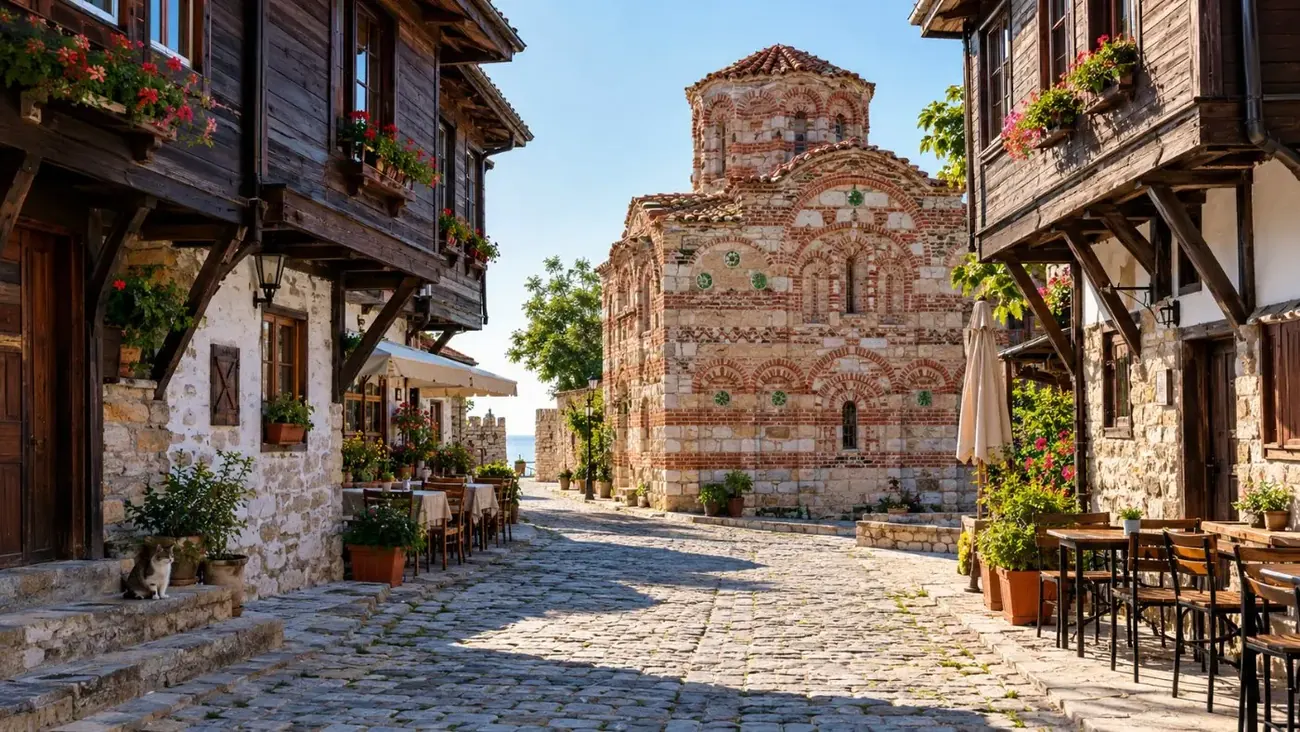
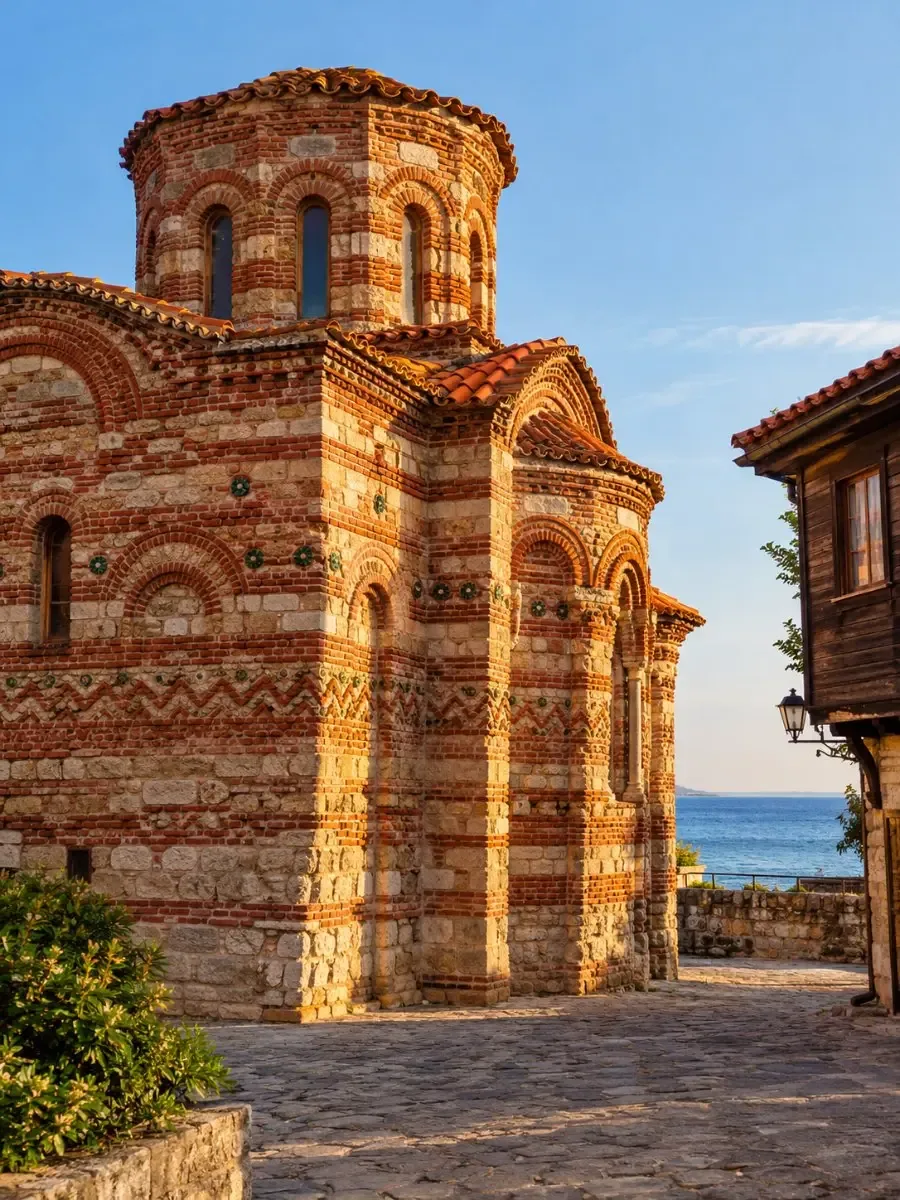
Christ Pantocrator is the first church you meet inside the gate and the most photographed, a 13th to 14th-century box of banded stone and brick, 16 metres by 6.9, with a bell tower over the narthex, a dome drum with eight windows and, above the apses, a frieze of brick swastikas, the old solar sign, that surprises people who do not know its age. Only traces of murals survive inside. When it operates as a museum it shows "Nessebar and the bay on old maps", 18 maps from the 4th to the 19th century.
In 2026 it has no row in the museum's price list or hours table, and visitors through the spring and summer reported it fenced for a second season pending restoration, with the exterior walkable and the door shut. Christ Pantocrator has been a monument of national importance since 1964 and the municipality has a separate project to restore St John Aliturgetos, so both may be behind hoardings for a while. Check on the day; the fence was easy to see from the lane.
Which churches are free to see?
St Sophia, St John Aliturgetos, the Eleusa basilica, St Demetrius, the Archangels and the working Church of the Assumption. That is most of the medieval town, for nothing.
St Sophia, the Old Metropolis, is a roofless three-nave basilica from the end of the 5th or start of the 6th century, rebuilt in the early 9th, 25.5 metres long, open to the lane on the north side of Mesambria Street. You walk in off the pavement. The municipality held a liturgy in it recently; the rest of the year it is the town's living room, with a bench and a cat.
St John Aliturgetos on the south shore is the beauty. Fourteenth century, never consecrated, which is what the name means, and wrecked by the 1913 earthquake. The east end is the richest brickwork in Nessebar, and the drop to the sea behind it is why you cannot go in. The Holy Mother Eleusa is a 6th-century basilica on the north shore, foundations and a bit of wall, in a spot with the best wind on the peninsula. St Demetrius, found in 1968, is a ring of column bases; the Archangels Michael and Gabriel is a roofless 13th to 14th-century shell near the north side.
The Church of the Assumption, 1857 to 1894 on Hemus Street, is the one working church, free, usually open through the day, and the only place in the old town where church manners apply: shoulders covered, quiet, no flash. On 15 August, the town's feast day, it is the centre of everything. Several of the better-preserved shells without paintings are used as art galleries by local gallerists, which is a free way to stand inside a medieval nave.
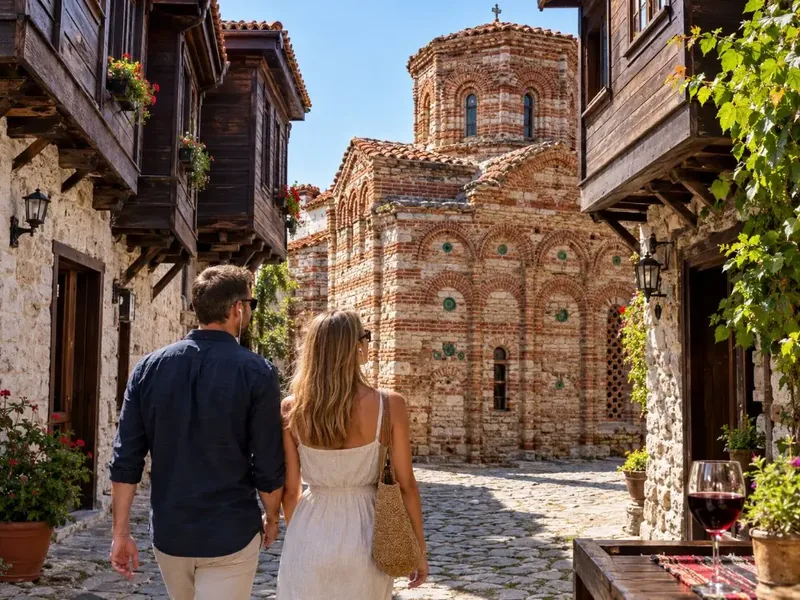
Two hours past every church above with a numbered audio guide, starting at the windmill and ending with a tasting at a winery inside the walls.
Explore the old town walk with wine tasting Tour detailsDo you need a guide for the churches?
No. The museum's 3.07 euro audio device, the labels and this page cover the five paid sites. The audio walk adds context for the lanes; the museum's own guided tours are the cheapest for a group.
Start with what the museum sells. The Guideport audio device is 3.07 euros per handset in eight languages including English, German, French, Spanish, Polish and Ukrainian, and it covers the Archaeological Museum. Guided tours in Bulgarian, Russian, German and English cost 15.34 euros per group of up to 20 for the museum, 10.23 for St Stephen, 25.56 for the panoramic walk with a museum site and 20.45 for "Faith in Nessebar", the church tour. Those are per group, not per person; split among six people the church tour is under 3.50 euros each.
The GetYourGuide option is the old town walk with wine tasting: a host at the windmill hands out audio devices in five languages and you walk the numbered route past more than fifteen landmarks at your own pace, ending at a winery. It is an audio-guided walk, not a guide at your elbow, and tickets are not included. It suits a first visit when you want the churches in order with a story attached.
If you want a person who answers questions, the museum's group tour is better value and better informed, with the catch that you arrange it at the ticket office in season. For a couple with one morning, we would buy the 7.67 euro combined ticket, borrow the audio handset, and spend the saving on the wine tasting at five. How the churches fit into a full day is in Nessebar in one day; who needs which tour is in the comparison.
Frequently asked questions
How much is the combined ticket for Nessebar's churches?
17.90 euros for all seven museum sites (child 8.69), 13.29 for all churches plus the windmill, or 7.67 for the Archaeological Museum and St Stephen, which is the one most visitors should buy. Sold at the museum ticket office inside the gate.
Is Christ Pantocrator open in 2026?
No. It is not in the museum's 2026 price list or hours table and has been fenced off for restoration, visible from outside only. Check on the day; St John Aliturgetos is also slated for restoration.
Is there a dress code for Nessebar's churches?
Not for the ticketed ones, which are museums. The working Church of the Assumption on Hemus Street is the exception: cover shoulders, keep quiet, no flash.
Are the small churches open in winter?
Only on request from 13 October to 31 March. The Archaeological Museum and St Stephen open 9:00 to 17:00 every day in winter, and that plus the free ruins is a complete off-season visit.
Ready to book
Choose your tour
Free cancellation up to 24 hours before on every option. Prices are from-prices in USD and move with the season.
Old Town Walk with Audio Guide & Wine Tasting
- Audio guide and headphones (EN, DE, PL, RU, BG)
- Route past more than 15 old-town landmarks
- Wine tasting at a winery in the old town
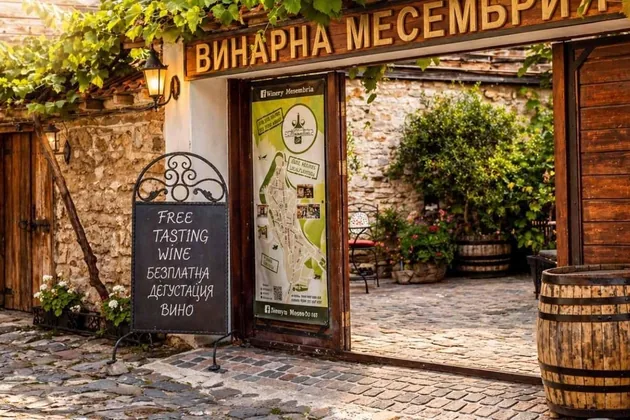
Wine Tasting with Homemade Focaccia
- Guided tasting of 5 to 6 dry Bulgarian wines
- Focaccia baked on site (vegetarian)
- Small group, 10 people at most
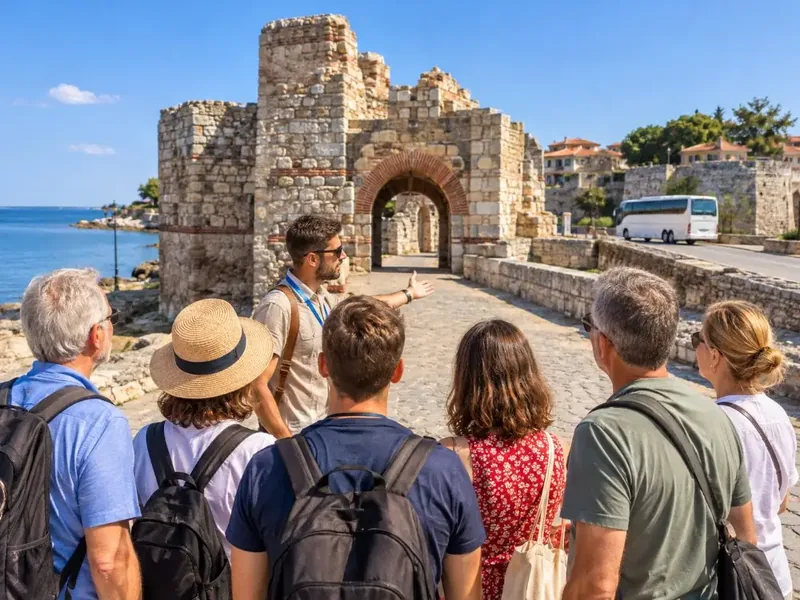
Guided Day Tour to the Ancient City of Nessebar
A live guide and transport if you are staying up the coast